 Wildwood Mobile Home Leveling
 Mobile Home Tie-Downs & Anchors in Wildwood, FL
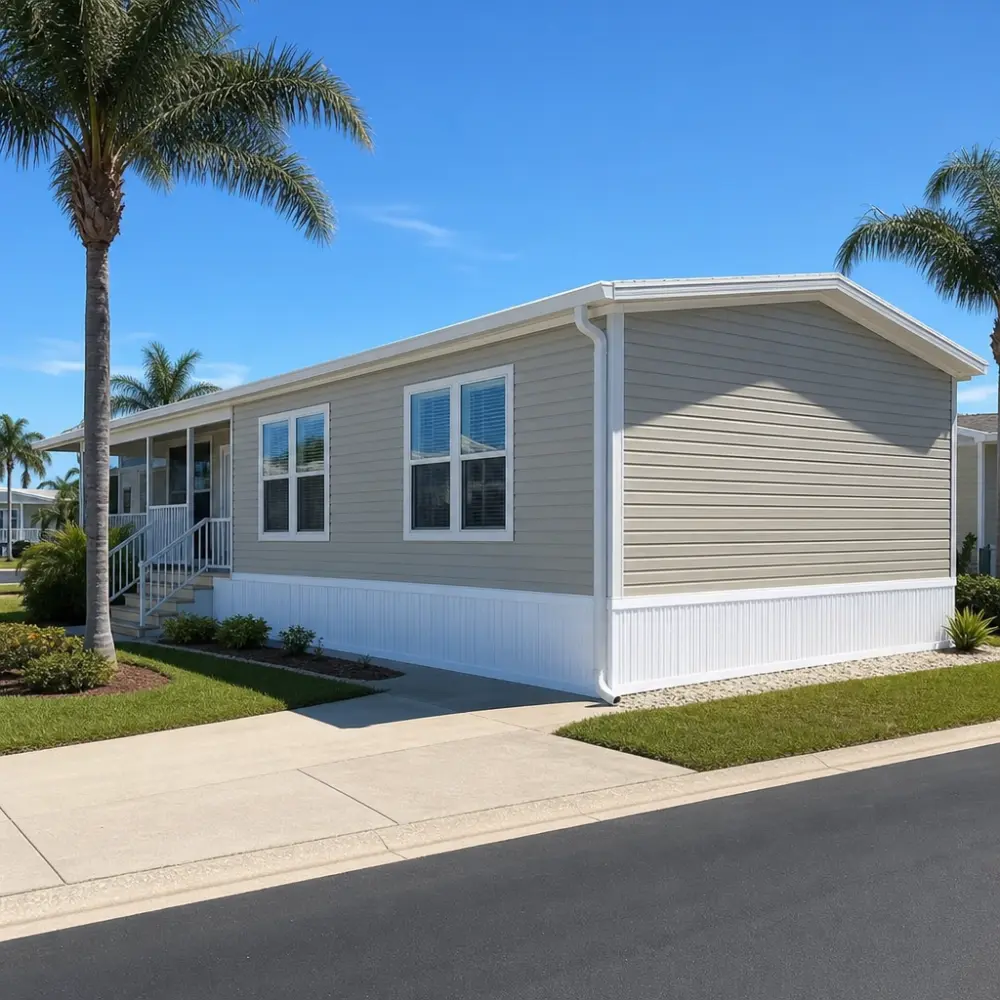
Tie-downs and anchors are the only thing holding a manufactured home to the ground in a windstorm. The system is simple: steel ground anchors screwed into the soil, galvanized straps running from the anchors to the frame, stabilizer plates that keep the anchor heads from plowing sideways, and longitudinal ties that resist wind along the length of the home. We arrange anchor installs, retrofits, strap replacement, and re-tensioning across Wildwood and Sumter County through licensed, insured Florida mobile home installers, to Florida Rule 15C-1 and HUD Wind Zone II. A full install or retrofit runs $600 to $3,500; strap re-tensioning comes with every relevel.
The worst wind Wildwood has seen on record started a few miles from here. The anchors are not theoretical.
The rules that apply in Wildwood
Wind Zone II. The federal standard at 24 CFR 3280.305 designs Zone II homes against a 100 mph wind and Zone III against 110. Florida’s Zone III counties are listed by name, Broward, Charlotte, Collier, Dade, Franklin, Gulf, Hendry, Lee, Martin, Manatee, Monroe, Palm Beach, Pinellas, and Sarasota, and every other Florida county is Zone II. That puts Sumter, Lake, and Marion in Zone II.
Florida Rule 15C-1.0104. This is the anchoring standard, and it is specific:
- Diagonal tie-downs for new and used homes, “in all wind zones, shall be spaced no farther apart than five feet four inches (5’4”) on center with anchors placed within two feet (2’) of each end.”
- Longitudinal tie-downs, or another approved longitudinal stabilizing system, are required on every new and used home installed after the rule took effect, with “at least four (4) anchors and straps” at the end of each section, “i.e., 16 per double-wide home.”
- Anchors come in two classes. Type I, for homes manufactured before July 13, 1994, is tested to a working load of 3,150 pounds and an ultimate load of 4,725. Type II, for homes built after that date, is tested to 4,000 pounds working and 6,000 ultimate.
- Frame ties use “a factory fabricated strap connected at the top of the I-beam to an I-beam clamp approved by the department.”
Sumter County’s permit. For a setup, Building Services on Powell Road in Wildwood wants two copies of the foundation and blocking diagram “with schematic of the manufacturers tie down” before it issues the permit, engineered if the lot is in a flood hazard area, and it issues that permit only to a licensed installer. The Florida tie-down requirements page sets the whole rule out in plain terms.
What the wind has done here
February 2, 2007. At 3:08 in the morning a tornado touched down near Wildwood in Sumter County, ran northeast at highway speed, crossed into Lake County, and lifted east of Lady Lake at 3:25. The National Weather Service survey rated it EF-3 with winds of 155 to 160 mph over a 16.5-mile track. It crossed the south side of The Villages, where Lake County emergency management reported “extensive damage to homes and mobile homes in The Villages and Lady Lake areas,” and then went through the mobile home communities off Griffin View Drive in Lady Lake, where eight people died. The count afterward ran to 1,246 homes and mobile homes damaged and 301 destroyed.
September 10 to 11, 2017. Hurricane Irma tracked up the peninsula and put a 60-knot gust on Leesburg International Airport with 42 knots sustained. The rain gauges tell the rest: 8.57 inches at Wildwood, 9.18 and 10.59 at the two Villages gauges, 10.13 at Leesburg, 11.03 at Lady Lake. Ground that wet holds an anchor differently for weeks afterward.
October 9, 2024. Milton was gentler in Sumter County than on the coast: the Weather Service put peak gusts at 40 to 50 mph, with a maximum of 46 mph near Center Hill, and 5 to 10 inches of rain with 11.71 near Lady Lake. The Withlacoochee River stayed in flood for weeks. Sumter County’s evacuation order was for mobile homes and low-lying areas, which is the county telling you what it thinks a manufactured home’s weak point is.
Three events, three different shapes, and in every one the manufactured homes that failed were the ones whose anchoring had quietly stopped being an anchoring system.
How anchoring fails without a storm
Settling loosens straps. Every time a pier drops a half inch, the strap running over that section of frame goes that much slacker. On Sumter County sand, where piers settle continuously, straps that were tight at setup are loose within a couple of years. A slack strap lets the home move before it loads, and a home that moves in a gust is a home that racks. This is why straps are re-tensioned as part of every relevel, and why we treat leveling and tie-downs as one job. The loose or rusted tie-downs page shows the three-minute check.
Anchors corrode below grade. The shaft of an anchor lives in damp sand or, on the Sparr and Adamsville flats, in ground that is saturated at two or three feet for half the year. Corrosion happens where nobody sees it.
Anchors hit rock. Sand over limestone with boulders in the profile means an anchor can stop short of its rated depth. An anchor that is only half in the ground has a fraction of its holding power, and it looks identical from above.
Older homes were anchored to the old rule. A large share of the park stock along SR 44, in the original Lady Lake communities where The Villages began as a mobile home park, and in Leesburg parks built in the 1980s predates July 13, 1994. Those homes were anchored with fewer ties, at wider spacing, to Type I anchors. Many have never had longitudinal ties at all.
Stabilizer plates are missing. Without a plate, the anchor head plows sideways through sand under load. Missing plates are one of the most common things we find on older installations.
What the tie-down inspection checks
The free survey that starts every job includes the anchoring. The crew checks for loose straps, straps running off-angle, the count of ties against the 15C-1 spacing for the home’s length, longitudinal ties present or absent, anchors and stabilizer plates in place, piers in contact with the frame, and corrosion on any strap or anchor. They note the anchor type against the home’s build date. You get a written count and a quote that separates re-tensioning from replacement from retrofit. The tie-down planner gives you the rough count before anyone visits.
Pricing
| Work | Range |
|---|---|
| Strap re-tensioning during a relevel | Included |
| Replace corroded straps or anchor heads | Quoted per anchor |
| Add stabilizer plates or longitudinal ties | Quoted per anchor |
| Full install or Zone II retrofit | $600 to $3,500 |
Anchor count drives the price. A short singlewide that needs a handful of replacements is the bottom of the range. A 70-foot doublewide on a pre-1994 anchor system that needs full diagonal spacing, 16 longitudinal anchors, and longer anchors because the first ones hit rock or loose sand is the top. The pricing page lays it out beside our other rates.
Timing
Anchor demand spikes twice: at the start of June when hurricane season opens and the 55+ parks have emptied for the summer, and in the weeks after a named storm. The better time is March or April, when the Lisbon normals put the ground at its driest, the snowbird owner is still in town to sign, and no one is in line. If you are selling, the pre-sale inspection covers the anchoring as part of its report. If the home is being moved, the new anchor system is part of the setup and goes on the county’s blocking and tie-down diagram.
All anchor work arranged through us is performed by licensed, insured Florida mobile home installers under section 320.8249. We cover Wildwood, Oxford, Lady Lake, Bushnell, Coleman, Webster, and Leesburg. Request the free inspection and find out what is actually holding your home down.
Frequently Asked Questions
How much do tie-downs cost in Sumter County?
A full anchor system install or retrofit runs $600 to $3,500 depending on how many anchors the home needs, which is driven by its length, the 15C-1 tie spacing, and how the soil takes an anchor. Replacing a few corroded straps or anchor heads is quoted per anchor, and strap re-tensioning is included with every relevel.
What wind zone is Wildwood in?
HUD Wind Zone II, designed against 100 mph. The federal standard at 24 CFR 3280.305 lists Florida's Zone III counties by name, all of them coastal, and puts every other county, including Sumter, Lake, and Marion, in Zone II.
How many anchors does my home need?
Florida Rule 15C-1.0104 spaces diagonal ties no more than five feet four inches on center with an anchor within two feet of each end, and adds at least four longitudinal anchors at the end of each section, sixteen on a double-wide by the rule's own arithmetic. A 60-foot singlewide needs a dozen or more diagonal ties per side before the longitudinal ones; a long doublewide can pass twenty anchors in total. The survey counts what is there and what the rule calls for.
My home was built in 1985. Do the old anchors count?
They may not. Rule 15C-1.0104 sets Type I anchors, tested to a 3,150-pound working load, for homes manufactured before July 13, 1994, and Type II at 4,000 pounds for later homes. An older home is also likely to have fewer ties than current spacing calls for, no longitudinal ties at all, corroded shafts below grade, and straps that went slack every time the home settled. A free tie-down inspection tells you exactly where it stands.
Does the limestone matter for anchors?
Yes. Sumter County is sand over the Ocala Limestone, and the soil survey labels whole map units around Wildwood with a bouldery subsurface. An anchor that hits a boulder before it reaches its rated depth is not developing its rated holding power, and an anchor screwed into loose Candler sand holds differently from one in firm ground. The crew tests each anchor as it goes in rather than assuming the soil.